
MACHINE PROTECTION & SECURITY
Don’t Give Them the Chance: A Practical Guide to Protecting Your Bike
15 August 2026
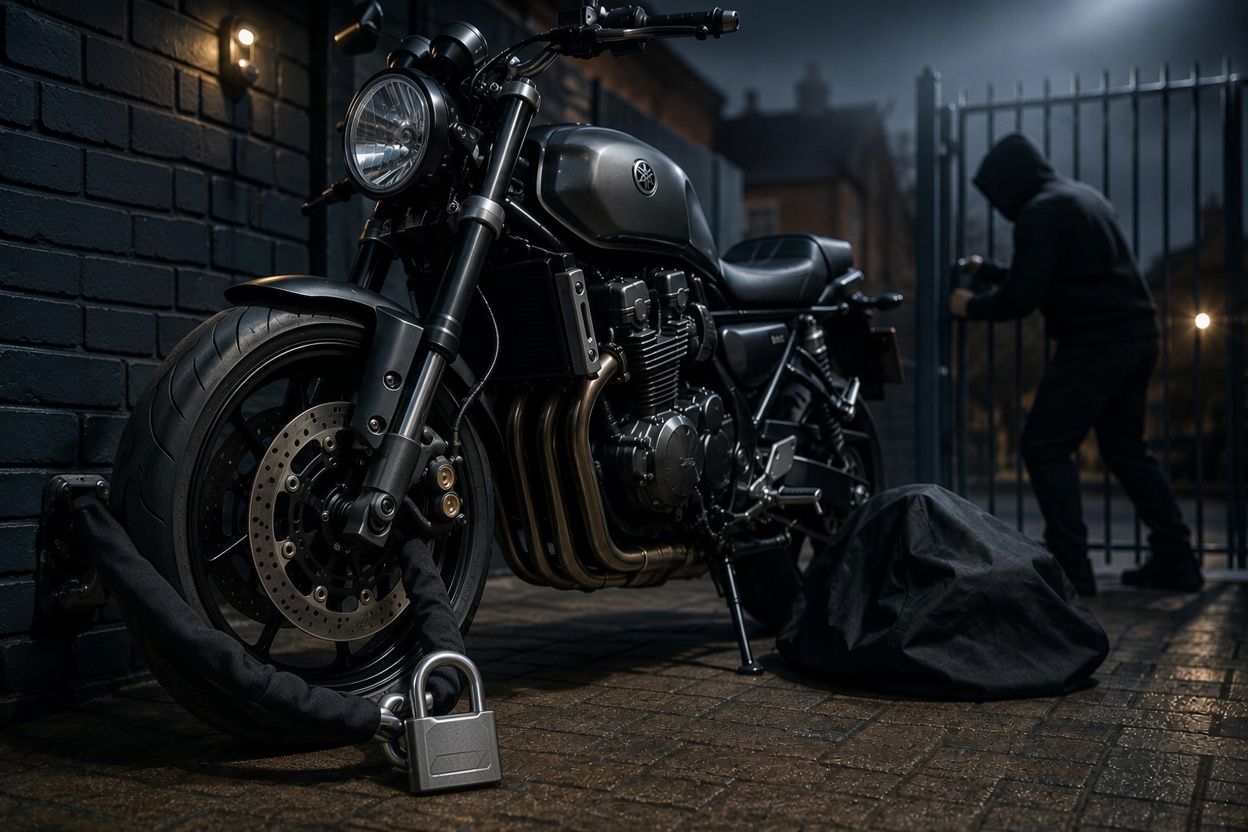
5 min readThere is few worse feelings in a rider’s life than walking out of your front door, café, or workplace, helmet in hand, only to find an empty space where your bike used to be.
Motorcycle theft in the UK is an ongoing battle. Modern thieves are quick, organised, and often equipped with cordless angle grinders or looking for easy, unchained targets they can roll away or lift into a van in seconds. But here’s the truth: most thieves are opportunists looking for the path of least resistance.
At One Split Second, we talk a lot about making calmer choices and building sharper habits in the saddle. But looking after your machine when the ignition is off is just as crucial as keeping your eyes up on a country bend. Protecting your motorcycle isn't about relying on a single silver bullet, it's about layering your security so that taking your bike becomes too slow, too noisy, and far too risky.
Here is our plain-language, rider-to-rider guide to keeping your bike safe, whether it’s parked in your garage or sitting outside a roadside café.
1. Out of Sight, Out of Mind
Thieves often scout locations before they strike. If they don't know what's sitting under a cover, they can't easily calculate its value or decide if it’s worth the risk.
Use a Quality Cover:
A plain, unbranded, waterproof bike cover is one of the cheapest and most effective security tools you can buy. Pulling a cover off in public draws immediate attention—the exact thing a thief wants to avoid.
Tuck It Away at Home:
If you have a garage or locked shed, use it. If you park on a driveway or street, try to park in a well-lit area covered by CCTV if possible, and position the bike so it’s tricky to maneuver out quickly.
2. Master the Layered Defence (Lock, Chain, Anchor)
Relying solely on your bike’s standard steering lock is a huge gamble, a swift heavy kick to the handlebars is usually all it takes to break one. Real physical security comes down to the three-part rule: Lock, Chain, and Anchor.
The Ground Anchor & Chain:
At home, your gold standard is a heavy-duty chain attached to a bolted or concreted ground anchor.
Pro Tip: Keep the chain off the floor (thread it through the frame or swingarm higher up). A chain resting on the ground gives thieves a solid surface to use bolt croppers or leverage tools against.
Look for Ratings: Stick to chains and locks rated Sold Secure Powered Cycle Diamond or Gold.
Disc Locks & D-Locks for On-the-Go:
When you’re out on a ride or commuting, carry a heavy-duty disc lock (preferably fitted to the rear sprocket or front disc) or a strong D-lock. A disc lock with a built-in 110dB movement alarm adds an aggressive audio deterrent if anyone tries to tamper with or upright the bike.
Don't Forget the Reminder Cable:
If you use a disc lock, always use a brightly coloured reminder cable wrapped around your throttle grip. It takes one split second of forgetfulness to drop your bike trying to pull away with a disc lock attached!
3. Technology: Trackers & Immobilisers
If a gang of thieves is determined enough to cut through physical locks or lift a bike into the back of a van, digital security is your final, unbreakable safety net.
GPS & Radio Frequency Trackers:
Modern trackers (such as Thatcham-approved S5 or S7 systems) monitor your bike 24/7. The moment the bike is moved without its key fob or ignition on, you (and a 24/7 monitoring centre) get an instant alert.
Tech Tip: Look for trackers that combine GPS with Radio Frequency (RF) or VHF technology. Standard GPS signals can be blocked inside steel shipping containers or underground car parks, but RF signals penetrate right through them, allowing recovery teams and police to locate the bike exact meters away.
Covert Trackers:
Devices like Monimoto or standalone battery-powered trackers are fantastic options for self-fitters. Hide them deep inside the bike’s frame, far away from the obvious battery terminal connections where thieves check first.
4. Everyday Habits That Make the Difference
Security isn't just about the kit you buy, it's about the small habits you build into your routine every single time you turn off the engine.
Lock It to Something Solid:
A lock around a wheel stops someone rolling the bike away, but it won't stop two people lifting it into a van. Always chain your bike to an immovable object (a street light, dedicated motorcycle bay anchor, or sturdy railings).
Chain Through the Frame or Rear Wheel:
Front wheels can be removed in a couple of minutes. Always loop your chain through the rear wheel, swingarm, or main frame.
Property Marking (Datatag / SmartWater):
Etching or microscopic chemical marking on your bike's major components makes stolen parts virtually impossible for thieves to sell on the black market. Displaying property marking stickers on your bike acts as another subtle warning flag.
The One Split Second Take
On a motorcycle, it only ever takes one split second of laziness, leaving the bike unchained "just for five minutes while I grab a coffee"is time for an opportunist to strike.
No single lock or tracker makes a bike 100% unstealable, but stacking physical locks, visual covers, and smart tracking tech shifts the odds entirely back in your favour. Make your machine as difficult, noisy, and time-consuming to steal as possible, and thieves will simply move on.
Join the Conversation
What’s your go-to security setup when you’re out on a road trip or parked up at home? Got a tip or a piece of kit you swear by? Head over to our One Split Second Facebook Community or check out our sister platform Motorcycle Basics for practical machine advice.
Look out for one another, look after your machines, and ride safe!
We want your rider stories to help others learn.
Drop us an email at: