
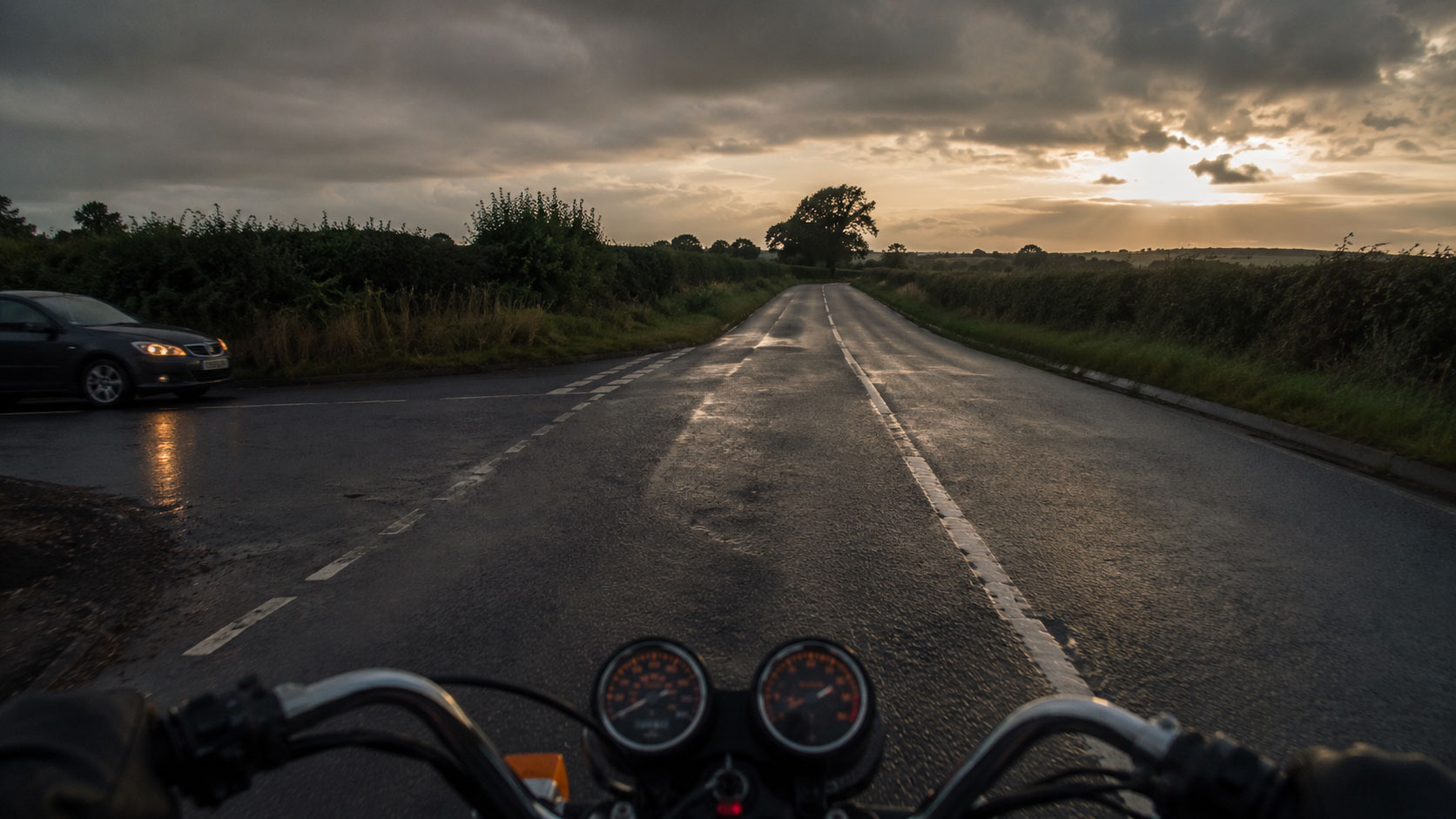
Junctions
The Most Dangerous Place on Your Ride
29 June 2026
3 min readAsk most experienced riders where their close calls have happened and a disproportionate number will give you the same answer: a junction. Not a fast road. Not a motorway. A junction.
That's not a coincidence. Junctions are statistically the most dangerous location for motorcyclists in the UK. According to data from the Department for Transport, a significant proportion of all serious and fatal motorcycle collisions involve another vehicle pulling out from, or turning at, a junction.
Understanding why junctions are so dangerous — and what you can do about it — could genuinely save your life.
Why junctions are so dangerous for riders
At a junction, multiple things happen simultaneously. Drivers are looking for gaps in traffic, judging speed and distance, checking mirrors, watching pedestrians, and managing their own vehicle. Motorcycles, being narrower and often moving faster than drivers expect, are easy to misjudge or miss entirely.
The classic scenario: a car is waiting to pull out of a side road. The driver looks right, looks left, decides the road is clear, and pulls out. Directly into the path of an approaching motorcycle.
The driver didn't deliberately ignore you. In many cases, they looked and genuinely didn't see you. Their brain filtered out the narrow, fast-moving shape and registered the road as clear. This is the same phenomenon behind SMIDSY — 'Sorry Mate, I Didn't See You' — one of the most heartbreaking phrases in motorcycling.
The types of junction that catch riders out
Not all junctions carry the same risk. These are the ones to treat with the greatest respect:
T-junctions on rural roads
vehicles pulling out at speed with poor sightlines
Crossroads with right-turning vehicles
a car turning right across your path
Roundabouts
vehicles entering without fully checking for approaching riders
Side roads on dual carriageways
vehicles pulling out at speed, often underestimating yours
Driveways and farm entrances
easy to dismiss, but real collision points on country roads
Ride like someone is about to pull out
This is one of the most powerful mindset shifts a rider can make.
That doesn't mean crawling around the country in a constant state of panic. It means looking further ahead, reading the road, spotting junctions early, and giving yourself options.
Don't approach a junction hoping no one pulls out. Approach it expecting that someone might, be ready to react if they do.
Junction approach checklist
Before and during every junction approach:
Identify the junction early
give yourself time to read the situation
Check for vehicles waiting to emerge
look for bonnets, movement, exhaust
Cover your brakes
don't wait until you need them to move your hand
Adjust your road position to improve your visibility to waiting drivers
Reduce speed if anything feels uncertain
speed costs reaction time
Assuming a waiting driver has seen you because they're looking
Relying on eye contact
a driver can look at you and still not register you
Approaching at speed without a plan if someone pulls out
Riding in a blind spot of a waiting vehicle
consider your position
Think: what is my escape route if that car moves?
Positioning makes a difference
Your position on the road affects how visible you are to drivers at junctions. Riding closer to the centre of the lane can make you more visible to a driver waiting on the left. Riding too close to parked cars or hedges may keep you hidden until the last moment.
Think about what a waiting driver can see from their position. If you can't see them clearly, they probably can't see you.
The One Split Second take
Most junction collisions don't happen because someone was going too fast or taking risks. They happen because a moment of inattention, a misjudged speed, or a blind spot led to a decision that couldn't be undone.
By reading junctions early, covering your brakes, questioning whether you've been seen, and always having an escape plan, you dramatically reduce the chances of that moment catching you out.
Ride Safe.
One glance at a junction. One decision by a driver. One split second that changes everything. Or doesn't — because you were ready.
We want your rider stories to help others learn.
Drop us an Email at: