
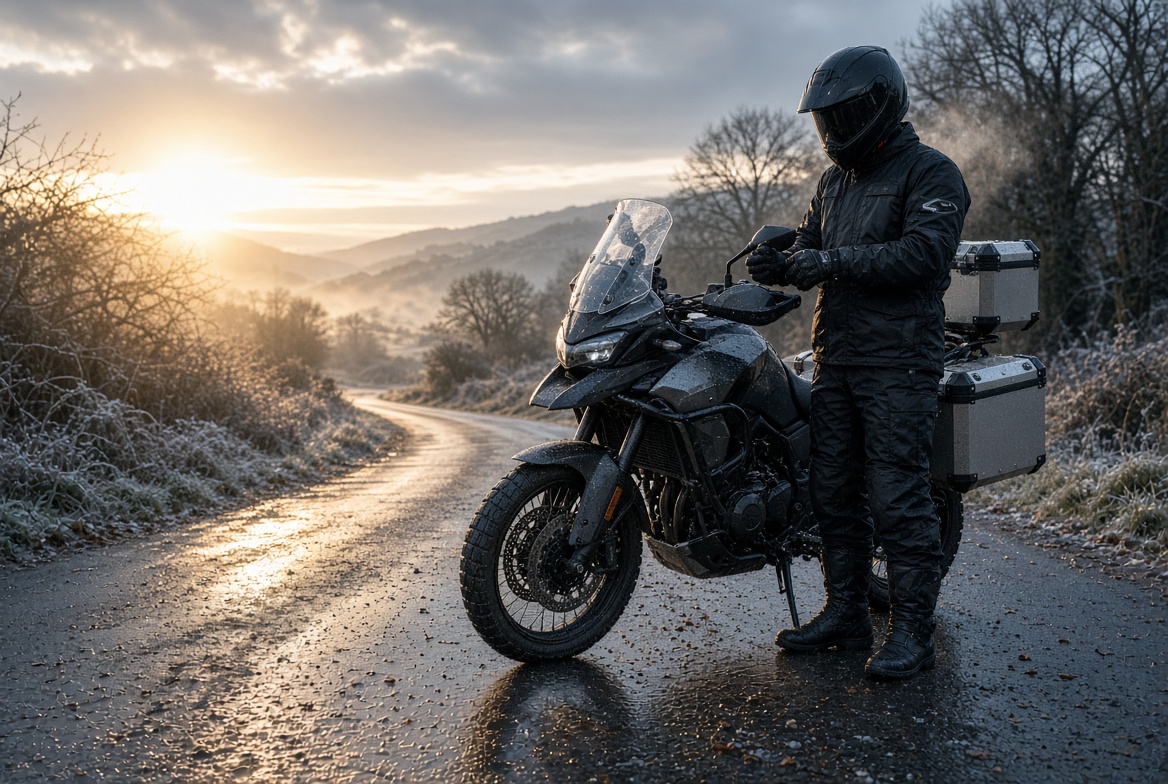
WINTER RIDING & ROAD CRAFT
Keeping It Upright: The Ultimate Winter Riding & Bike Care Guide
18 October 2026
4 min readWinter riding on UK roads demands a fundamental shift in mindset, from managing cold tarmac and road salt to protecting yourself against hypothermia and cognitive fatigue. Staying dry and warm keeps your reaction times sharp, while simple pre-ride checks and calculated roadcraft preserve your margin for error when grip levels drop. Here is our essential guide to winter maintenance, riding gear, and keeping your bike upright through the cold months.
Riding a motorcycle through a UK winter requires a major shift in mindset. As temperatures plummet, daylight hours shrink, and wet roads take days to dry, your margin for error narrows dramatically.
Winter riding isn't about proving how tough you are—it’s about managing traction, keeping yourself warm and dry so fatigue doesn't ruin your focus, and keeping your bike mechanically sound. Taking simple precautions with your gear, your roadcraft, and your machine will keep you safe and stable when conditions turn grim.
"In winter, smooth inputs aren't just good technique, they are your primary line of defense against losing grip."
Stay Dry and Warm: Fighting Hypothermia and Cognitive Fatigue
Getting soaked on a motorcycle does far more than make you uncomfortable; it accelerates physical and mental exhaustion. Water transfers heat away from the body roughly 25 times faster than air, and when combined with high-speed wind blast, wet gear leads to rapid core heat loss.
When your core temperature drops, blood flow restricts to your extremities to shield vital organs. Cold, stiff hands delay your ability to reach or modulate the front brake and throttle smoothly. Worse still, shivering and cold exposure trigger cognitive fatigue, slowing your reaction times, impairing spatial judgment, and causing your mind to wander. When your brain is fighting the freezing cold, you simply lose the mental bandwidth needed to process environmental hazards.
The Fix: Smart Layering & Gear
Moisture-Wicking Base Layers:
Wear technical base layers against your skin to draw sweat away. Avoid cotton, which traps moisture and chills you.
Insulating Mid-Layers:
Use thermal layers or heated gear beneath your jacket to retain core heat.
Waterproof Outer Shells:
Invest in breathable, waterproof rain gear or a Gore-Tex outer shell with CE-certified armor.
Extremities:
Heated grips, thermal glove liners, and windproof neck gaiters keep your hands nimble and your focus sharp.
Visor Clarity and Winter Glare
Breathing cold air into a chilled helmet fogs up your inner visor quickly, while road grime and salt spray coat the outside. Opening your visor exposes your face to freezing air and driving rain. Furthermore, a low winter sun bouncing off wet tarmac creates intense glare.
The Fix: Fit a Pinlock anti-fog insert to prevent internal misting, and treat the outer visor with a water-repellent coating. Keep a clean microfibre cloth handy for wiping away road spray, and use a drop-down internal sun visor to manage low sun glare.
"When mental bandwidth is consumed by fighting the freezing cold, you lose the extra second needed to process environmental hazards."
Winter Machine Maintenance: Essential Checks
Your machine needs extra care during the winter months. Salt and grit spread on icy roads melt ice, but they also accelerate rust and corrode exposed metal. Taking a few extra minutes for pre-ride checks keeps your bike predictable when traction is low:
Tyre Pressures:
Cold air temperatures cause tyre pressures to drop. A drop of just 3–4 PSI alters the tyre footprint, destabilises handling, and makes turn-in feel sluggish. Always check pressures when the tyres are cold.
Chain Care:
Winter road grit and salt quickly strip lubrication, creating stiff, rusty links that bind and wear out sprockets. Clean your chain regularly, adjust it to the correct factory tension, and apply fresh chain lube to the inside run to prevent driveline snatch mid-corner.
Fluids & Brakes:
Check your oil sight glass and brake fluid reservoirs. Cold, damp weather can cause road grime to stick to brake calliper pistons, so ensure your front brake lever and rear pedal feel firm rather than spongy.
Staying Upright: Traction and Roadcraft
Low temperatures and wet surfaces prevent road tyres from reaching optimal operating heat, severely reducing overall friction. You must adapt your roadcraft to stay upright over winter hazards:
Avoid Slick Hazards:
Keep the bike as upright as possible over wet manhole covers, drain grates, trench plates, painted road markings, and decaying leaf piles.
Watch the Grit:
Loose salt and grit accumulate in lane centres, along kerbs, and at corner apexes, acting like ball bearings under lean angle.
Progressive Controls:
Use the System of Motorcycle Control (Information, Position, Speed, Gear, Acceleration) to sort your speed before reaching a bend or hazard. Smooth, progressive inputs on the throttle and brakes prevent sudden losses of grip.
Double Stopping Distances:
Leave at least double your usual following distance to avoid emergency braking on slick tarmac.
The One Split Second Take
Winter riding doesn't mean putting your bike away for the season, but it demands respect for the conditions, your machine, and your physical limits. Layering up to stay dry, maintaining your machine, and riding with smooth, calculated inputs will protect your margin for error on cold roads.
Before heading out onto wet or freezing tarmac, run through your bike checks, dress for the elements, and give yourself extra space and time on every journey.
How do you prepare your bike and gear for riding through the winter months? Share your go-to cold-weather setups and tips on our Facebook Community page!
Ride safe, keep it calm, and stay dry out there.
We want your rider stories to help others learn.
Drop us an email at: