
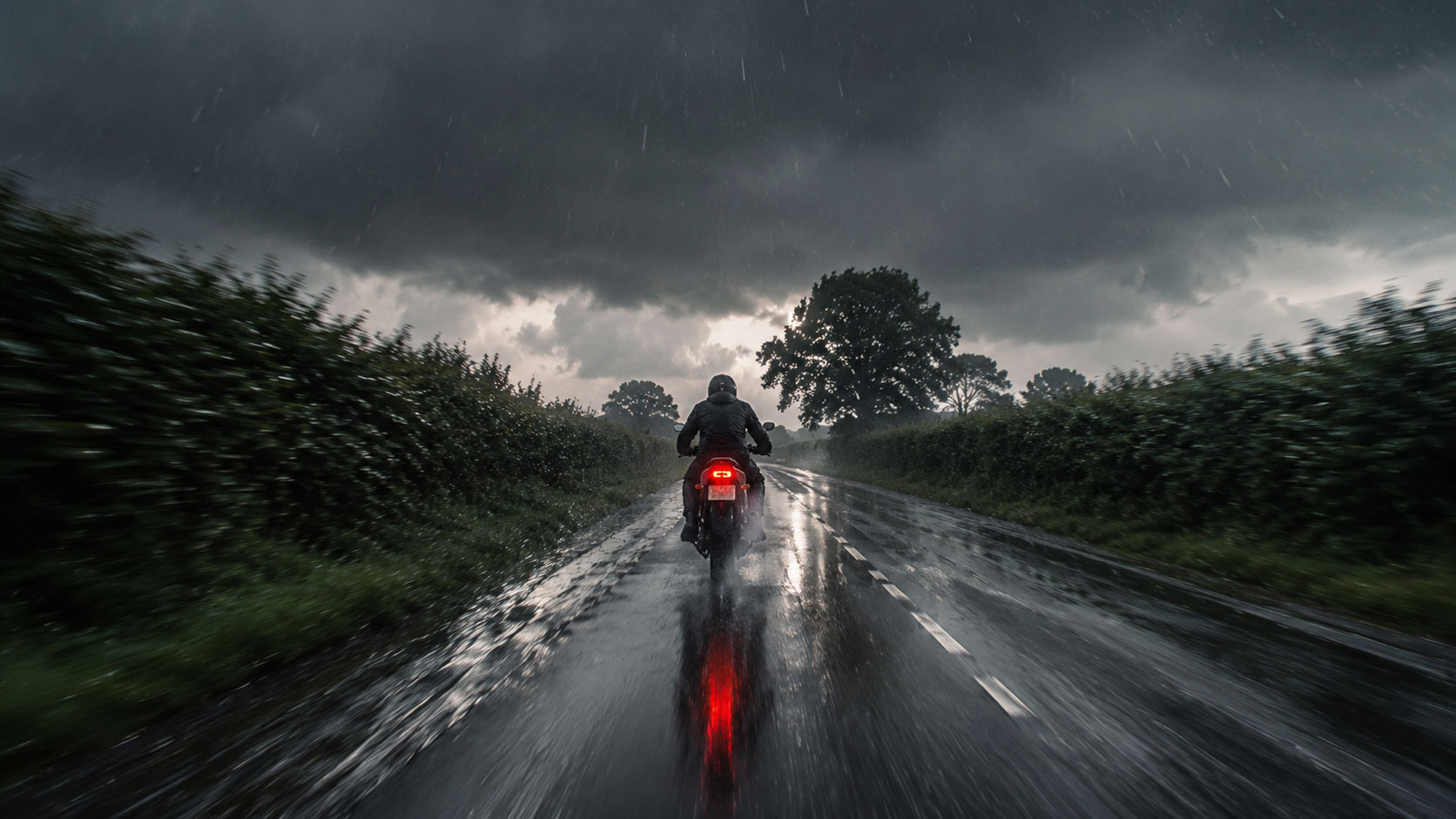
Keep yourself safe in bad weather
Riding in the Rain: What the UK Weather Demands of Every Rider
30 June 2026
3 min readIf you ride in the UK, you ride in the rain. There's no avoiding it. The question isn't whether you'll encounter wet roads — it's whether you're prepared when you do.
Rain changes everything. The road surface you know well in dry conditions behaves completely differently when wet. Grip reduces. Stopping distances increase. Visibility drops. White lines, drain covers, and painted markings become significantly more slippery. And all of this can catch out even experienced riders if they're not thinking ahead.
The science behind wet grip
When it rains, a thin layer of water mixes with oil residue, rubber dust, and road debris that has built up on the tarmac. This creates a genuinely slippery film, particularly in the first 20–30 minutes of rainfall before the road is properly washed.
Your tyres still work in the wet — they're designed to disperse water through their tread patterns — but the margin for error shrinks. The same braking force or lean angle that felt perfectly safe in dry conditions may be too aggressive when it's wet.
The road you ride every day becomes a different road in the rain. Treat it that way.
Surfaces to watch for in wet conditions
Not all surfaces behave the same when wet. These are the ones that deserve extra caution:
White lines and road markings
can become extremely slippery, especially painted hatching
Drain covers and manhole lids
metal surfaces lose almost all grip when wet
Diesel and oil patches
common at junctions, roundabouts, and fuel stations
Autumn leaves
deceptively dangerous, especially on rural roads and in bends
Newly resurfaced roads
loose chippings and surface dressing hold water differently
Painted pedestrian crossings
the paint itself is slick when wet
Smooth is safe: how your inputs change in the rain
In dry conditions, your motorcycle will forgive a slightly sharp application of brakes or a rougher gear change. In the wet, abrupt inputs are more likely to result in a loss of traction.
Everything becomes about smoothness: smooth throttle application, progressive braking, gradual steering inputs. Think of it as giving your tyres time to do their job rather than demanding everything at once.
Wet weather riding checklist
Before and during riding in wet conditions:
Check tyre pressures before riding
wet grip degrades faster with incorrect pressures
Increase your following distance
stopping distances are significantly longer in the wet
Apply brakes progressively
avoid sharp, sudden inputs on either brake
Look further ahead
give yourself more time to spot and react to hazards
Avoid white lines, painted markings, and drain covers when cornering
Riding at dry-weather speed in wet conditions
Braking hard while the bike is leaned
do most of your braking upright
Riding worn tyres in the rain
wet grip fails significantly before legal minimum tread
Assume the first 20–30 minutes of rain produces the most slippery conditions
Treat roundabouts with extra care
multiple painted lines and drain covers
Visibility — yours and theirs
Rain reduces visibility from both directions. Other drivers can't see you as clearly. You can't see the road as clearly. Both of those things matter.
Use your dipped headlight. Consider a high-visibility vest or jacket — not because it guarantees you'll be seen, but because it reduces the chance of being missed. Keep your visor clean and use a suitable anti-fog product if you can.
Spray from other vehicles can dramatically reduce your forward vision on faster roads. Increase your following distance not just for braking, but for sight lines too.
Don't let cold and wet distract you
Riding in the rain is physically demanding. Cold hands affect your control. A fogged visor forces you to ride with it cracked open. Discomfort creeps in and your focus starts to shift away from the road.
Invest in good wet weather gear. Waterproof gloves, a properly fitting jacket with sealed seams, and waterproof overtrousers aren't luxuries — they're part of staying alert and in control.
The One Split Second take
Wet conditions don't have to stop you riding. But they do demand a different approach: smoother inputs, more space, lower speeds, and a heightened awareness of what's beneath your wheels.
Ride Safe.
The UK doesn't wait for good weather. Neither should your riding skills. Learn to ride well in the rain, and you'll be safer every time the sky clears too.
We want your rider stories to help others learn.
Drop us an Email at: