
Attitude & the road
Sharing the road: why attitude matters as much as skill
28 September 2026
3 min readMost of us got into riding for the same reasons: the freedom, the feel of a good road, the quiet satisfaction of getting from A to B smoothly. Along the way, most riders also pick up a mental checklist of near-misses, close calls, drivers who genuinely didn't clock us in time. It's part of riding, and it's why we all get better at scanning ahead.
What's worth talking about is what happens next, once that frustration builds up over enough rides. It's easy, without really noticing, to start expecting other road users to adjust for us: to move over, to spot the gap, to react faster because we're on two wheels. That's not really about the Highway Code's rules for junctions and priority, it's just human nature responding to stress. But it's worth catching, because a car, a cyclist, or a pedestrian has exactly the same right to that road as we do.
This isn't about riding timidly, or losing the alertness that keeps us visible and predictable. It's about where confidence actually comes from.
How frustration builds, ride after ride
It rarely starts as arrogance. It usually starts small: a driver who pulls out without looking properly, a queue that doesn't quite leave a gap, a moment where we had to brake harder than we'd like. None of that feels great in the moment, and it's completely understandable to come away from it a bit wound up.
The thing to watch for is what that frustration turns into over time. A few close calls can start to feel like a pattern, and a pattern can start to feel like everyone else on the road just isn't paying attention to us specifically. Most of the time, that's not quite what's happening.
Everyone shares equal right to be there
Here's the bit worth sitting with: a car, a cyclist, a learner driver, someone crossing awkwardly with shopping bags, none of them owe us priority just because we're on a bike. Being smaller and more exposed in a collision is a good reason to ride with extra margin for other people's mistakes. It's not a reason to expect other people to make way.
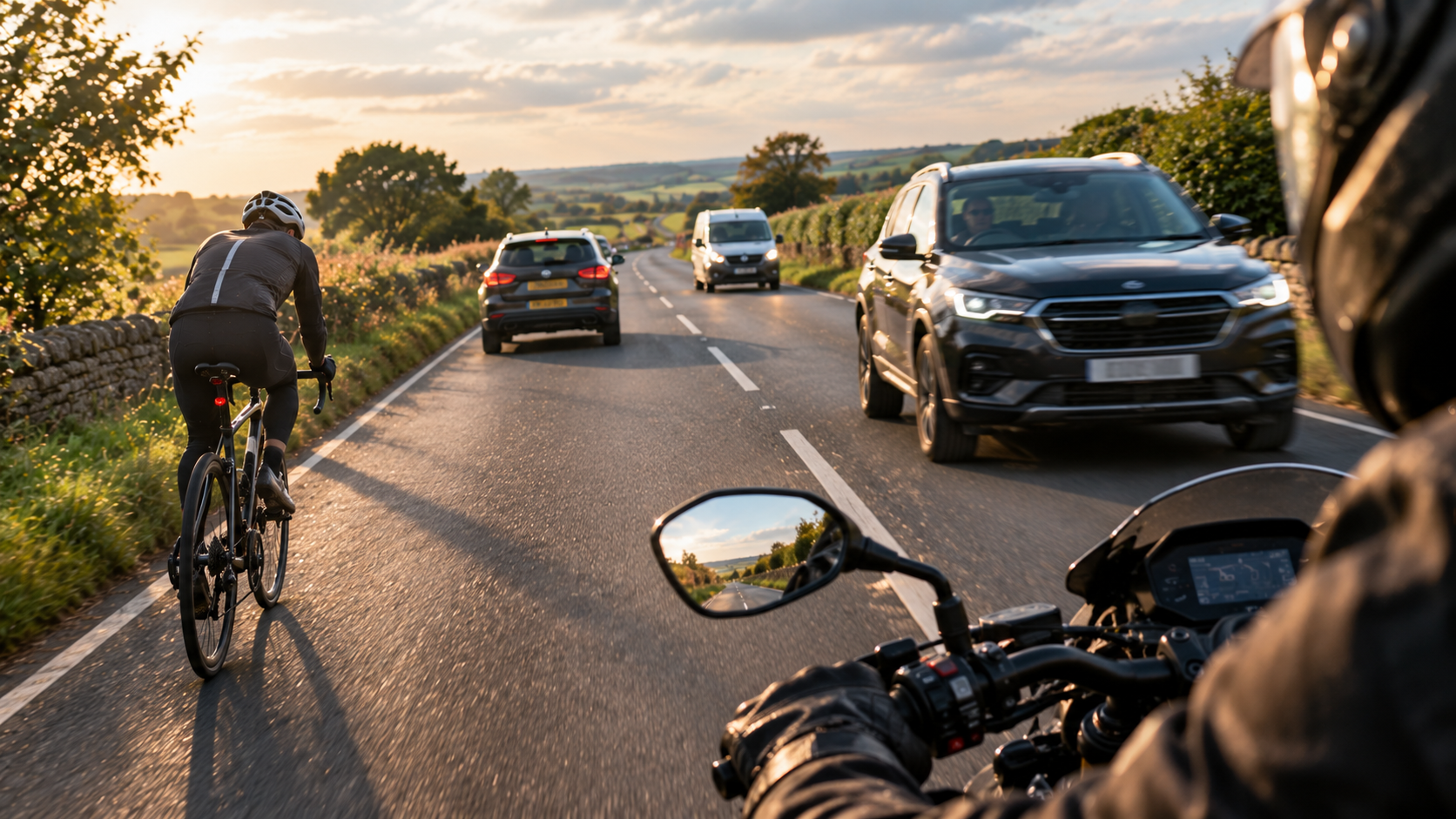
Filtering is a nice example of this. It's legal and often sensible in slow traffic, and it works best when we read the situation and move through it considerately, rather than assuming everyone else will spot us and hold a gap open.
Confidence on a bike works best when it comes from our own skill and awareness, not from assuming everyone else will adjust for us.
Hesitation is usually caution, not a snub
A driver who pulls out slowly, or waits an extra beat at a junction, isn't necessarily being inconsiderate. More often than not, they're just being careful, and careful is exactly what we want from the people sharing the road with us. It's easy to read that caution as an inconvenience, but that's actually good driving doing what it's supposed to do.
What this looks like on the road
None of this means riding smaller or losing the assertiveness that keeps us visible. It just means separating "I need space to react safely" from "I'm owed that space regardless of what's around me." The first is roadcraft. The second tends to catch people out eventually, on any set of wheels.
Ride assuming other road users haven't seen you yet, and leave room for that
Treat a driver's hesitation as caution worth respecting, not an inconvenience
Filter and position with courtesy, reading the situation as it unfolds
Try not to assume being on a bike means priority over everyone else
Watch for old frustrations turning into resentment on every new ride
Notice when a driver's mistake starts to feel personal, and give it a second look
The One Split Second take
Good roadcraft and entitlement can look quite similar from the outside. Both involve confidence and decisive riding. But they come from different places. One comes from skill, awareness, and respect for everyone else's right to be out there. The other comes from frustration that's built up over time, and it tends to catch up with people eventually.
The riders most of us admire aren't the ones who expect the road to clear for them. They're the ones who read it well enough that they rarely need it to.
Ride Safe.
One split second spent assuming someone will move for us is one split second we didn't spend planning for what happens if they don't.
We want your rider stories to help others learn.
Drop us an email at: