
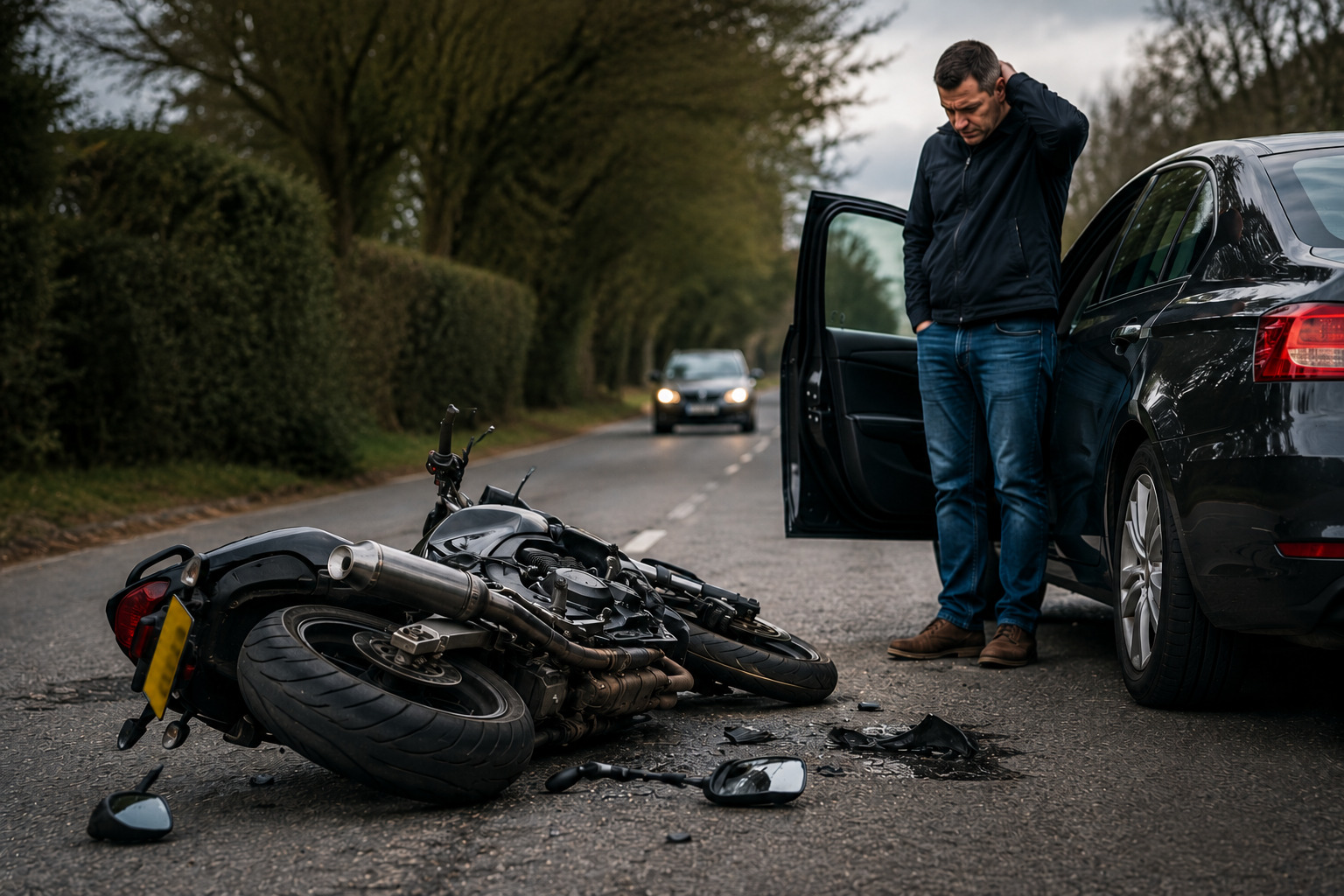
SMIDSY: "Sorry Mate, I Didn't See You"
14 June 2026
3 min readYou may have heard the phrase SMIDSY. It stands for "Sorry Mate, I Didn't See You" – a phrase that has sadly become all too familiar after many motorcycle collisions.
In most cases, the driver isn't lying. They looked, but they didn't see the motorcycle. This phenomenon is known as "looked but failed to see", where the brain simply doesn't register the bike as a hazard. As frustrating as that is, understanding why it happens can help us become safer riders.
Why Motorcycles Get Missed
Motorcycles are smaller than cars, present a narrower profile, and can be harder to judge in terms of speed and distance. A driver waiting at a junction may glance both ways, spot larger vehicles, and pull out believing the road is clear. Unfortunately, the approaching motorcycle may not register in their mind until it's too late. This is one of the most common causes of serious motorcycle collisions.
Ride Like You're Invisible
One of the best pieces of advice any rider can follow is this:
Ride as though other road users haven't seen you.
That doesn't mean being fearful—it means staying alert and expecting mistakes.
When approaching junctions, side roads or roundabouts, ask yourself:
Is that driver looking at me or through me?
Could they pull out?
Is there anything blocking their view?
Do I have an escape route if they move?
By constantly asking these questions, you put yourself in a better position to react if the unexpected happens.
A Real-World Example
Imagine you're riding along a 60 mph country road.
Ahead, a car is waiting to emerge from a side junction on your left. The driver appears to be looking in your direction.
You assume they've seen you and continue at the same speed.
Just as you reach the junction, they pull out.
The driver later says the words no rider wants to hear:
"Sorry mate, I didn't see you."
Whether it was due to distraction, misjudging your speed or simply failing to register your presence, the outcome can be devastating.
What Can Riders Do?
While we can't control the actions of other road users, we can reduce our own risk.
Some simple habits include:
Slow down when approaching junctions or areas of uncertainty.
Position yourself where you're most likely to be seen.
Use dipped headlights where appropriate.
Wear gear that helps you stand out in different lighting conditions.
Avoid lingering in blind spots.
Cover your brakes when a situation looks uncertain.
Keep scanning for an escape route.
Most importantly, don't rely on eye contact alone. A driver may look directly at you and still not process that you're there.
Visibility Isn't Just About Clothing
Bright jackets and colourful helmets can help, but they aren't a guarantee.
Good road positioning, smooth riding, and anticipating hazards often do more to keep you safe than relying solely on high-visibility gear.
The aim is to make yourself easier to notice while always riding with the expectation that someone might not notice you at all.
The One Split Second Mindset
At One Split Second, we believe awareness saves lives.
SMIDSY collisions often happen in just a moment—a driver makes a decision based on incomplete information, and a rider has only a split second to react.
By expecting the unexpected, reading the road ahead, and never assuming you've been seen, you give yourself the best possible chance of avoiding becoming part of that statistic.
Final Thoughts
The phrase "Sorry Mate, I Didn't See You" offers little comfort after a collision.
As riders, we can't eliminate every risk, but we can stack the odds in our favour through better observation, smart positioning, and defensive riding.
Ride with the mindset that visibility is earned, not guaranteed.
Because one split second of anticipation could be the difference between a close call and a life-changing collision.
Ride Safe.