
Strength in Numbers, Safety in Chaos: The Rules of Group Riding
23 June 2026
4 min readThere is nothing quite like a weekend group ride out. Rolling down a sweeping UK A-road with a pack of like-minded riders, the rhythmic thrum of multiple engines, and a shared destination for a bacon roll or a coffee, it’s one of the best parts of motorcycling culture.
But as any seasoned rider knows, adding more bikes to the mix changes the dynamic instantly. What starts as a relaxed social ride can quickly turn chaotic if everyone isn't on the same page. When you’re riding in a pack, your margin for error shrinks. A single sudden brakelock or a missed junction doesn't just affect one person, it creates a domino effect.
At One Split Second, we’re all about making calmer choices and building sharper habits. Group riding is no exception. It isn’t about riding robotically or acting like a drill sergeant; it’s about establishing a mutual understanding so that everyone gets to the destination safely.
Here is our practical, rider-to-rider guide to group etiquette and safety on UK roads.
1. The Pre-Ride Briefing: Set the Rules Before the Engines Start
Never just turn up, wave, and click into first gear. Spend five minutes by the bikes talking through the plan.
Establish the Route & Stops
Make sure everyone knows the final destination and any planned fuel stops. Don't assume everyone has the same tank range; plan around the bike with the smallest tank.
Assign Roles
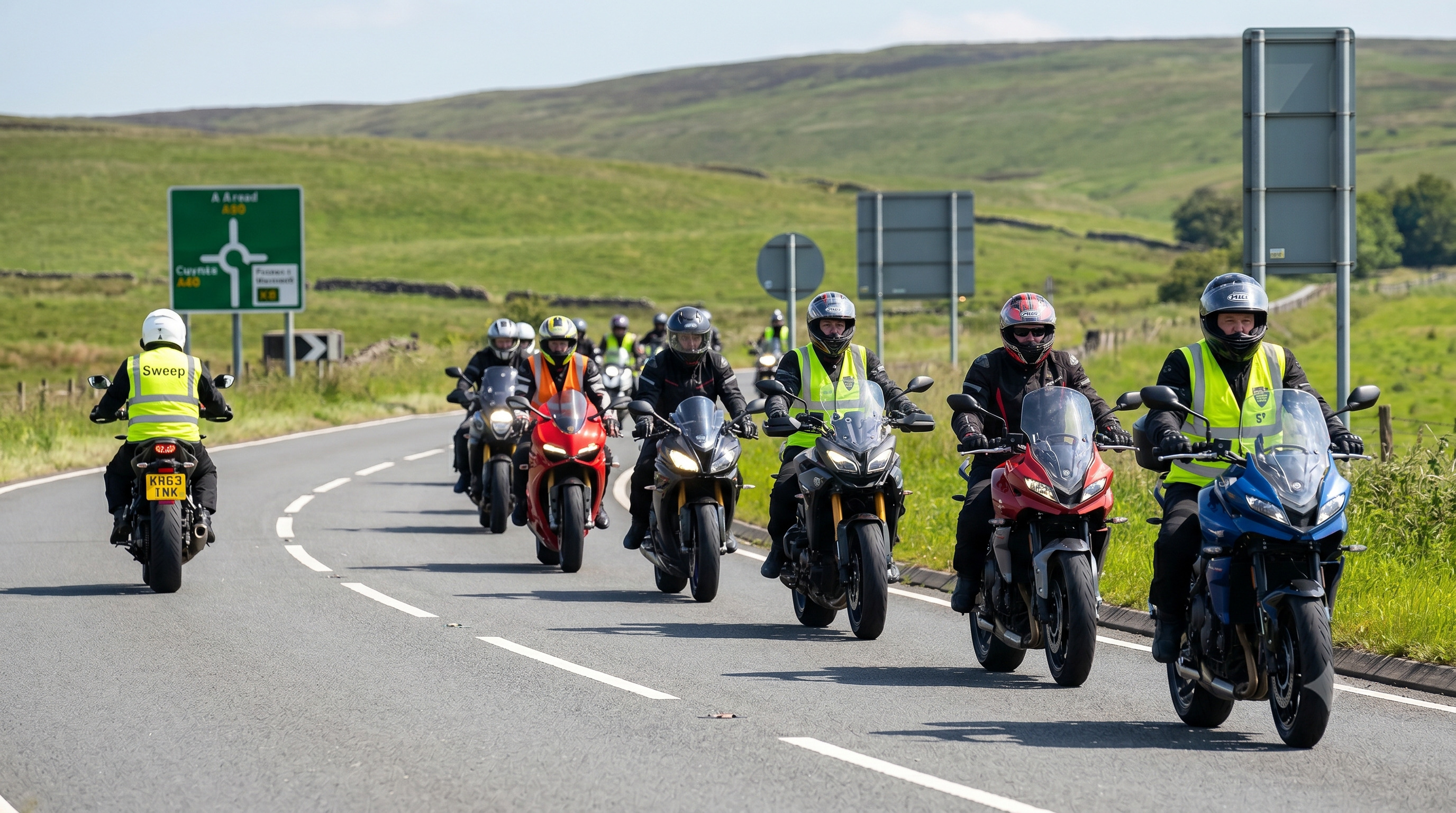
You need a Lead Rider (the navigator who sets a steady, predictable pace and looks well ahead) and a Tail Rider or "Sweep" (an experienced rider who stays at the back to ensure no one gets left behind or deals with a breakdown alone).
Agree on Hand Signals
Keep them simple. Signals for "slowing down," "hazard on the road," and "I need fuel" should be universal across the group.
2. The Formation: Staggered, Not Tailgating
On open straight roads or dual carriageways, the staggered formation is the gold standard for group safety. The leader rides on the right-hand side of the lane (position 3), the second rider sits slightly back on the left-hand side (position 1), the third on the right, and so on.
Why it works
It gives every rider a clear line of sight ahead and maximises your stopping distance without making the convoy miles long.
Mirror check, pack-wide
On open straights, make a habit of keeping the rider directly behind you in view in your mirrors. If everyone does this, it creates a chain reaction — any gap or dropped rider gets noticed almost instantly, and the awareness passes forward through the pack all the way to the Lead Rider.
The Golden Rule
Staggered formation is for straight roads only. When you approach tight twisties, bends, or roundabouts, drop back into single-file to allow everyone to use their optimal riding line and road positioning safely.
3. The Second Drop-Off System (The 'Manoeuvre')
Losing someone at a UK roundabout or a hidden country junction is incredibly frustrating and often leads to the trailing riders riding too fast or panicking to catch up. The easiest way to prevent this is the Drop-Off System:
When the Lead Rider approaches a turning or a junction where the route changes, they signal to the rider directly behind them (Rider #2) to pull over safely and mark the junction.
Rider #2 stays in that safe position, pointing the rest of the pack in the right direction.
Once the Tail Rider (Sweep) arrives, Rider #2 slots back into the pack right in front of the Sweep.
This means nobody has to memorize the map, nobody gets lost, and the pack naturally rotates.
Note for large, multi-lane roundabouts:
On big, busy roundabouts with multiple exits, there often isn't a safe spot for Rider #2 to pull in and mark the junction. If the group isn't too large and Rider #2 can keep the Sweep (who should wear distinctive hi-vis) in sight, they don't need to pull over — they can stay in the flow and let the Sweep's visible position confirm the group is still together.
4. Over-Take with Direct Accountability
Overtaking a slow-moving tractor or lorry on a single-lane country road is where group dynamics can become dangerous.
Ride your own ride: Never blindly follow the rider ahead into an overtake. Just because they had enough room to get past doesn't mean you will.
When you complete an overtake, keep your throttle open for a moment to create a safe space behind you for the next rider to slot into. Don't cut back in and immediately slam on the brakes.
5. Check Your Ego at the Ingress
The biggest hazard in any group ride isn't the road surface or the weather, it's peer pressure. Pack mentalities can cause newer or less experienced riders to push past their comfort zone to keep up with faster bikes.
No preaching: If you are a faster or more experienced rider, don’t push the pace to show off.
If you are a newer rider, ride at your pace. A good group will always wait for you at the next drop-off point or junction. Never let a split-second desire to look quick override your own observation, roadcraft, and limits.
The One Split Second Take
A brilliant group ride relies on predictability. When your movements are smooth, steady, and communicated clearly, the entire pack stays relaxed. Car drivers can see you, hazards are spotted early, and the ride feels seamless.
It only takes one split second of heat-induced panic, a missed shoulder check, or an aggressive overtake to turn a fantastic day out with your mates into a serious incident. Look out for one another, keep it calm, and enjoy the ride.
Have you got a great story or a tip from your own group riding experiences?
Ride Safe.
We want your rider stories to help others learn
Drop us an email at: