
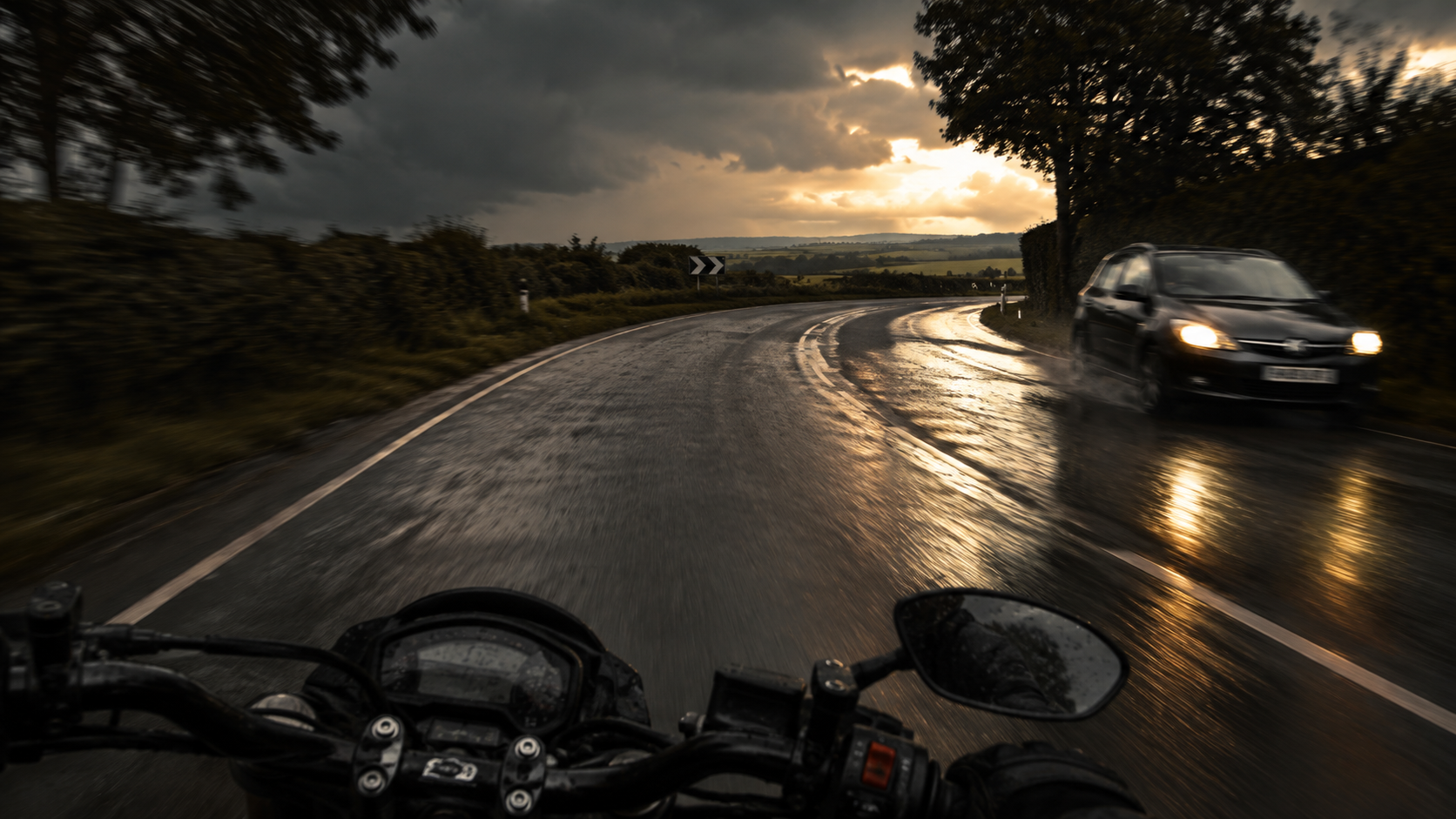
After the Dry Spell
The Dry Spell Trap: Why the First Rain Is the Most Dangerous Ride of the Year
12 August 2026
3 min readAfter weeks without proper rain, the first downpour can feel like relief — cooler air, cleaner-smelling roads, an excuse to finally test the wet-weather kit that's been sitting in the wardrobe.
But for riders, that first rain is one of the least forgiving conditions you'll face all year. Not because the rain itself is unusual, but because of what it's landing on.
A dry spell doesn't leave the road surface unchanged. It leaves it loaded — with oil, rubber, dust, and grime that's had weeks to build up undisturbed. The moment rain finally arrives, all of that lifts off the tarmac and mixes with the water before it's washed away. For a short but genuinely dangerous window, you're not riding on wet road. You're riding on a thin film of everything the dry spell left behind.
Why this rain is worse than normal rain
In a UK climate that rains often, road surfaces get a fairly regular rinse. Oil drips, brake dust, pollen, and rubber deposits from tyres don't get much chance to accumulate before the next shower clears them off. A long dry spell removes that natural reset. Every warm, dry day adds another thin layer, and by the time rain finally falls, weeks of residue are sitting on the surface waiting to be activated.
When water hits that layer, it doesn't just get wet — it turns greasy. The combination is genuinely lower grip than a normal wet ride, and it's worst in the first 20–40 minutes of rainfall, before enough water has fallen to flush the residue away. Experienced riders who'd happily lean into a corner on a rain-soaked commute will tell you the first ride after a dry spell is the one that catches them out.
What to actually watch for
Some surfaces get more dangerous than others once the residue starts to lift:
Junctions and roundabouts
cars idle here longer, so oil and grime build up more heavily than anywhere else on your route
Road markings and painted lines
thermoplastic paint is slippery when wet at the best of times, and a residue layer makes it worse
Tar bleed
sun-softened tar that's oozed to the surface during hot weeks re-hardens with a slick, almost polished finish once wet
Drain covers and manhole lids
always worth avoiding in the wet, doubly so now
Dust and pollen turned to slurry
anything blown onto the road during the dry weeks becomes a fine, slippery film
Cracked or crumbling tarmac and verges
dry ground shrinks and cracks, and those gaps fill with water you won't see coming
Standing water where you don't expect it
Parched ground doesn't absorb rain the way it normally would. Instead of soaking in, water runs straight off compacted, sun-baked earth and drains slower than usual — which means surface water and localised flooding can appear on stretches of road that have never given you trouble before. Don't assume a familiar route will behave the way it always has.
How your riding needs to change
The core advice is the same as any wet ride, just turned up a notch for the first hour or so:
Smooth, progressive inputs on the throttle, brakes, and steering — nothing sudden
More following distance than you'd normally give in the rain, not less
Avoid the "racing line" through corners where cars concentrate oil and rubber
Scan further ahead for standing water, painted surfaces, and drain covers rather than reacting late
If you can, let the rain fall for 30–40 minutes before you set off — the worst of the residue is usually gone by then
Quick checklist
Check tyre pressure and tread before you ride
Ease off well before junctions and roundabouts
Increase following distance beyond your usual wet-weather gap
Wear proper wet-weather kit, even for a "quick" trip
Assume a route you know well will behave normally
Brake or accelerate hard on painted lines or drain covers
Ride the same line as the car in front
Underestimate a short dry-spell shower
It's not just you
Other road users are just as unprepared as the tarmac. Drivers who haven't needed their wipers or checked their tyres in weeks are suddenly dealing with reduced visibility, aquaplaning, and a windscreen full of grime the first swipe just smears around. Give them the benefit of the doubt and a bit more space — their reactions are as rusty as the road is greasy.
The first rain after a dry spell isn't a reason to stay off the bike. It's a reason to ride like you mean it for the first half hour, then relax into a ride that's genuinely safer once the surface has had a proper wash. Reading the road is as much a part of riding well as reading the weather — and knowing what a dry spell leaves behind is what makes the difference.
Because sometimes, staying upright comes down to one split second.
Ride Safe.
Got a story about being caught out by a first-rain ride? We'd love to hear it
get in touch and it might feature in a future post.