
First on scene
When the ride goes wrong: what happens in the first 10 minutes?
18 September 2026
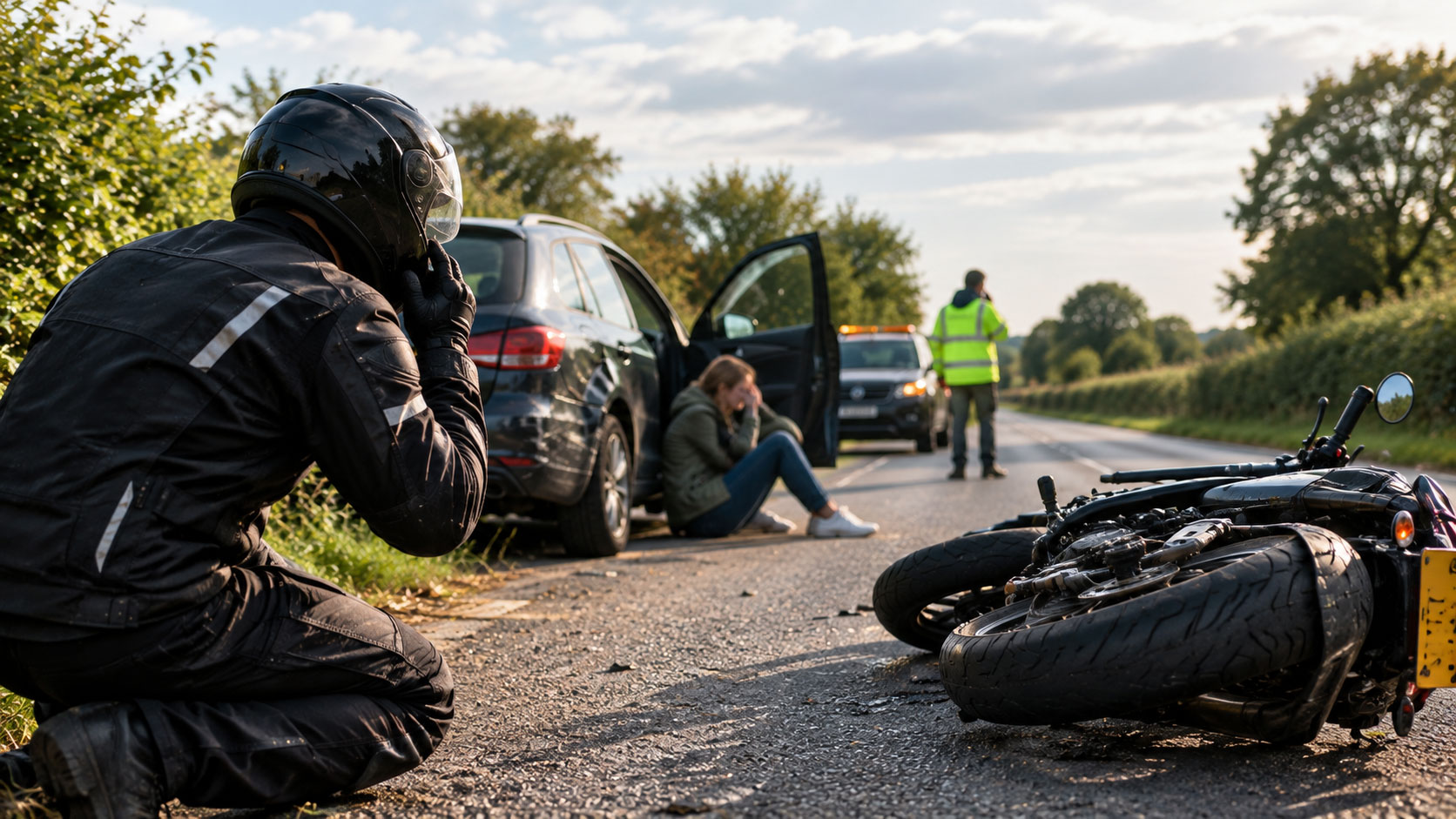
4 min readMost of what gets written about crashes is about avoiding them: reading the road, spotting the give-way that isn't going to give way, buying yourself that one extra split second. This isn't that article. This is about the moment after someone else's split second runs out, and you're the one who reaches them first.
It happens more than riders like to think about. In 2024, 340 motorcyclists were killed and 5,468 were seriously injured on Great Britain's roads, and 69% of those deaths happened on rural roads, the kind of roads where the nearest ambulance is often furthest away. The national target for the most serious 999 calls is an average response of seven minutes, with nine out of ten arriving inside 15. That's an average, not a promise, and on a B-road at dusk it can be longer.
So for a few minutes, you might be the only care that rider gets. That's not a call to become a paramedic. It's a call to know the handful of things that genuinely help, and just as importantly, what not to do.
Scene first
Make the scene safe before you touch anything
Every piece of official guidance puts this first, before first aid, before anything else. Pull in somewhere safe, hazards on, hi-vis on if you're carrying it, and warn approaching traffic before you go anywhere near the casualty. Rule 283 of the Highway Code asks you to get other drivers to switch off their engines too. A second collision on the same stretch of road is a real risk, especially on a bend or a fast rural straight, and it helps nobody if you become the next casualty.
Call it in
Call 999 (or 112) and be exact about where you are
Location is everything. On a motorway, the marker posts on the hard shoulder give an exact reference. Elsewhere, note the road name, direction of travel, and the nearest junction or landmark, and use what3words if you have signal and the app installed; it's accepted by the great majority of UK emergency services and can save precious minutes on an unmarked lane. Tell the call handler how many people are hurt and whether they're conscious and breathing. That's what decides how the call gets categorised, and how fast help moves.
Hands off, mostly
Don't move them, and don't touch the helmet
This is the part that goes against instinct. The Highway Code is explicit: do not move an injured person unless they're in immediate danger from fire or explosion, and do not remove a motorcyclist's helmet unless it is essential and you are trained to do so. Moving someone with a possible spinal injury can turn a survivable injury into a life-changing one. If the helmet is genuinely blocking their airway, it needs to come off, carefully, with one person stabilising the head and neck while another eases it free, visor up first. That technique is exactly what free Biker Down courses, run by fire and rescue services around the country, teach riders in an afternoon.
You don't need to be a paramedic. You need to not make it worse, and then not disappear.
What you can actually do
Check breathing, stop the bleeding, keep them warm
Once the scene is safe and the call is made, check they're responsive and breathing normally without shifting them more than you have to. If there's heavy bleeding, apply firm, direct pressure with whatever clean fabric you've got, a t-shirt, a bandana, and keep it on. Loosen anything tight around the neck that isn't the chin strap, keep them warm, and keep talking to them, even if they don't answer.
Don't leave
Stay until it's handed over
Stay with them until an ambulance or the police arrive. Tell the paramedics exactly what you saw and did, when it happened, and anything that changed. If you were involved as a road user, exchange details before you go. Riding off because you've "done your bit" leaves a gap in the story that the casualty can't fill in for themselves.
Do, don't, think about
Once the scene's safe and help's on the way, here's the short version to keep in your head:
Stop somewhere safe, hazards on, hi-vis if you've got it
Call 999/112 straight away with the clearest location you can give
Check they're breathing without moving them more than necessary
Apply firm, direct pressure to any heavy bleeding
Stay until an ambulance or the police arrive, and tell them exactly what you saw
Don't move an injured rider unless they're in immediate danger from fire or oncoming traffic
Don't remove the helmet unless it's stopping them breathing
Don't leave the scene before someone official says you can
Think about whether you're actually trained for what you're about to attempt, a Biker Down course fixes that gap in an afternoon
Think about your own visibility: you're now stood in the road too
The One Split Second take
Nearly all of this is restraint, not heroics. Doing the small, useful things and resisting the urge to do more than you're trained for. The rider on the ground doesn't need a hero. They need someone calm, who called it in properly, checked the basics, and didn't make a bad ten minutes worse.
Ride Safe.
The split second isn't always yours. Sometimes it's what you do with somebody else's.
Sources
Everything above is drawn from the following official guidance and organisations:
- Reported road casualties Great Britain: motorcyclist factsheet 2024, DfT
- The Highway Code: breakdowns and incidents (274 to 287)
- NHS ambulance response time targets
- Using what3words in a UK emergency
- St John Ambulance: primary survey (DR ABC)
- St John Ambulance: severe bleeding
- Biker Down course overview, Motorcycle News
We want your rider stories to help others learn.
Drop us an email at: